Applying the Deer Whistle Test

I love my family. It’s currently the waning hours of a Thanksgiving weekend, and I’ve been watching NFL football while placing small wagers with my brother (capped at $20 per game), and enjoying some amazing food. It’s also, here in Chicago, the weekend of the first significant snow of the season. This view is from my flat’s second story window yesterday, with many inches falling since. But when I was growing up, my nuclear family, chockablock with accountants, made me doubt my own tenuous grasp on math and probabilities. They seemed to me to defy common sense.

To be fair, they were equally mystified by some of my decisions. Especially when I dropped ten bucks on a pair of deer whistles.

I guess I can thank my family for my iconoclastic streak. That, and back in the last century, school children were taught about Fulton’s Folly. From dinner table conversations of my youth I could relate to what Robert Fulton faced. He endured howling public ridicule when he built the first steam-powered riverboat. Critics called it a folly because they couldn’t imagine that something powered by steam alone could be viable in fast-flowing rivers. He proved them wrong, and I’m guessing educators of the day thought it was a good idea to talk about him to students, and, as Apple later told us, to Think Different.

Scratch that. I guess I should thank the Escanaba Public School system for my questioning of the status quo.

I fitted my car’s front-facing bumper with a pair of deer whistles, the size of squat hot dogs, to protect me from colliding with the prolific deer in our part of Upper Michigan. This was a time well before the internet. My evidence was scant — just word on the street. All I knew about deer whistles was that they were cheap, easily available at gas stations, and lore had it that Michigan State troopers tried them on their cruisers and reported a reduction in deer strikes. Today that story might be called too good to check.

Since then there has been considerable research into deer whistle effectiveness, and I find the research conclusive that they provide zero protection. But hindsight is twenty-twenty.

Here was my calculation: While the science to deer whistles was lacking, the costs were low. I had ten dollars to spare, and the cost of striking a deer could be in the thousands, and, on the ice and snow of Midwest winters, maybe also costing me my life. At best, they were harmless. But to my family? You would think I had decided to shop at my hometown’s meager mall, The Delta Plaza, wearing a red clown nose and giant floppy shoes.

When I reminded them of this cost / potential benefit analysis, they persisted in calling it a waste of money. We’re talking a family dispute, so of course I’d retaliate. I would remind them of the evidence that was already in about their weekly spending on lottery tickets, and the microscopic likelihood of a large payout and positive return-on-investment. That somehow didn’t score me any points with them.

Separating Dogma from Statistics

When the mRNA vaccine for Covid was released under Operation Warp Speed, and I read that there were vaccine skeptics, it reminded me of those family disputes. Because somehow having a whistle on my bumper was a signal to my family’s tribe that I was an idiot and a sucker.

Deer whistles, before social media — through pure word-of-mouth apparently — became a marker to the majority of Upper Michigan drivers of the breathtaking gullibility of their owners.

Are you surprised that community disapproval can be so strong without the aid of the tribal sorting hat called social media? Consider the hunting and killing of witches.

Actually, please don’t. It’s too bleak. Except I’m sure many witch hunters were convinced of their existance, and the righteous thing to do was quite obviously to put them to death. (Sadly, not all were sincere. There were incentives in othering small groups of vulnerable humans. Nothing has changed since then, alas.)

I thought of deer whistles when we were just coming out of the Covid lockdowns, and I was getting my first haircut by a professional, after months of doing it myself. Here was my Covid-era autohaircut:

Yeah, not pretty. The woman cutting my hair — a stranger to me I had chosen randomly to fix my terrible haircut — said she chose not to be vaccinated after doing her own research. She’d been watching YouTube videos that were supposedly from morticians, and they reported they would attempt to embalm people who had died after taking the vaccine and their blood had turned to powder.

I swear this is true.

She said, earnestly, “They interviewed, like, five morticians, and they all said they saw the same thing!” I was taken back to my youth. But she wasn’t my family, so I was less strident. I politely asked how many morticians she thinks there are in the U.S.

If a million people have died of Covid, maybe just those who have tended to those deceased are — conservatively — fifty thousand morticians. So assuming those videos weren’t staged, that’s one-ten-thousandth of all morticians who are reporting finding powdered blood. She didn’t take it well and I changed the subject.

Today, in spite of scoring a passable-but-not-extraordinary B+ on my university statistics classes, I know that Deer Whistle Tests are available to all of us. The only caution is to try to separate your thinking from the groupthink of the tribe you identify with.

The Doctor who Infected Himself to Solve a Medical Mystery

Tribes aren’t neccesarily anti-science. They can possess impressive levels of expertise. Here’s a famous and relatively recent example from medicine. It reminds me of the quote by German physicist Max Planck, who said, in frustration with his field’s groupthink, that “Science advances one funeral at a time,” as old ideas are only replaced once their defenders are deceased.

While I was disagreeing with my family about the utility of deer whistles, I was still trying to forget some of the meals I was compelled to eat at my childhood dinner table. My father had a stomach ulcer, and experts at the time said there was no cure, only a treatment. And that treatment was insanely bland food.

I still wince at the thought of eating one of my father’s favorite items out of the cookbook his physician had given him (actually, given to him to hand over to my mom). It was called Salmon Pie, and was a pie crust baked with a filling of mashed potatoes, dehydrated onion mix and canned salmon. Just the thought of its texture makes me wince, a half century later.

To quote the lede from this post, “Australian doctors Barry Marshall and Robin Warren discovered that H. pylori could lead to peptic (stomach and duodenal) ulcers. Having taken biopsies from patients with stomach ulcers and culturing the organisms in the lab, the doctors discovered the bacteria and its link to stomach ulcers following a clinical trial with 100 patients in 1982.”

This was a standard practice — culturing biopies — but physicians of the time called it folly, because they were convinced all the science that was needed was in: Ulcers were caused by stress and excessive stomach acid. These were communities of highly respected physicians.

Marshall and Warren were ridiculed when they presented their paper. The duo persisted for more than a decade. It’s possible ulcers might still be considered an incurable illness if Dr. Marshall hadn’t, exasperated, publicly dosed himself with the bacterium and induced a severe peptic ulcer within days. Then cured his ulcer just as quickly with the appropriate antibiotic.

Applying the Deer Whistle Test

Today I take multi-vitamins, in spite of my disdain for the unregulated supplement industry. I do it reluctantly, because of the Deer Whistle Test. Back then, the cost of trusting that deer whistles might be effective was $10. Today I spend that much monthly on the vitamins, knowing the worst that can happen is they do nothing.

Those are pro versus con calculations I can live with.

LGBTQ+ Pride celebrations matter today more than ever

A version of this was originally shared in a Pride edition of a newsletter behind my employer’s firewall.


I met Arnie at a job we both hated. It was Milwaukee in the mid-1980s, and we were earning a little better than minimum wage doing one of the most reviled occupations of that era: Outbound Telemarketing. He and I were seated next to each other in a vast, windowless room.

Along with dozens of other poor saps, Arnie and I each had a land line telephone in front of us, and a long list of phone numbers for households we were expected to call, pulling their residents away from dinners to ask them for donations.

To make the most of the work we got to know each other, and soon became pretty tight work friends. (I imagine the same thing happening today in similarly unpleasant workplaces. I’m picturing some Nebraska abattoir, disassembling livestock. Yes, telephone “boiler rooms” were that hellish. Think of that scene from The Wolf of Wall Street, where they were selling worthless stocks over the phone, just without the childish antics and cocaine.)

I explained to Arnie that my wife and I had moved to Milwaukee for work. That job evaporated with the early-eighties recession, and I took this in the evening hours to help pay the bills while I spent my days building a client base for my tiny direct response consultancy. And hey, it was still marketing, right?

I can’t recall exactly what work Arnie was out of, but we bonded over humor writing. Our friendship helped ease the deadening grind.

He was the first to tell me the good news — that he was able to quit for better employment. He had applied to lead the fund-raising arm of a vibrant cultural community center, one I won’t name here. And after several interviews, he had gotten the job! I think it was then that he disclosed why having employer-subsidized health insurance was so important to him. He had recently been diagnosed with HIV/AIDS.

We eventually lost touch, but not before I learned that when his employer found out he was gay, and had the deadly virus, they fired him. That was sadly not uncommon.

After that I kept tabs on him via a free, gay and lesbian newsletter distributed in places that stocked other free newspapers (as a history lesson, did you know that before The Onion was an online satirical news site, it was a free newsprint weekly? Arnie and I both loved it).

The name of Arnie’s monthly column in that gay newsletter was Positively HIV. That was so him. He wrote about the treatments he was pursuing, the experimental protocols, and the “adventures” he was having with homophobic family members.

Then one month they ran his obituary.

I miss Arnie. And I often think of him and all the other exceptional human beings we lost too young, to a disease whose lethality could have been blunted years earlier with meds if not for prejudice. Another history lesson: Our country’s president initially downplayed the severity of the epidemic and his administration resisted calls for increased funding for research and treatment. The CDC was initially prohibited from using the term “AIDS” in its reports. This, when thousands of Americans were dying every year.

You can learn more about this stain on our country through pop culture. Check out the latter two seasons of the Ryan Murphy series Pose, streaming on Hulu. Keep a box of Kleenex handy.

But just as Arnie chose to give his column a “positive” spin, I’ll wrap this up with the good things that came out of that dark time. I can think of several.

Similar to how police harassment in Manhattan led, in 1969, to the Stonewall Rebellion, HIV/AIDS galvanized the community even more. For instance, it gave rise to ACT UP, an organization that, among other things, shamed politicians into addressing the scourge.

There is a straight line from this dark period to the joyous Pride celebrations we know today.

I’m also convinced that it was the pitch black shadow of HIV that recently caused something extraordinary. Have you noticed that the U.S. is not dealing today with widespread infections of Monkey Pox, a.k.a., Mpox? This painful, disfiguring, and sometimes fatal skin-borne disease was spreading rapidly a few years ago, primarily through the gay community. That triggered a truly remarkable — and successful — vaccination drive. Because gay men got vaccinated in mass numbers, and took other protective measures, we are all far less likely to catch Mpox. Technically not an STI, the virus could have been unleashed across the general population if the number of gay men infected had become too great.

If he were here today, Arnie would be positively delighted.

Why I’ve left the last Meta platform

On January 7 of this year, Mark Zuckerberg announced he’s getting rid of fact checkers at Meta, which owns Facebook, Instagram and WhatsApp, and is instead relying on “community notes, similar to X.”

A little background about me: I’ve long been off of Facebook. If you’re curious why, I may be posting on another blog about the grave harm that has come from Facebook’s algorithm of “engagement” over public safety, with the evidence starting in 2016. Facebook willfully ignored the systemic abuses taking place in Myanmar, which ultimately contributed to, the next year, the murder, rape and exile of the Rohingya Muslims living there

A report filed by Amnesty International stated, “While the Myanmar military was committing crimes against humanity against the Rohingya, Meta was profiting from the echo chamber of hatred created by its hate-spiralling algorithms.”

As reported to the U.S. congress at the time, Steve Bannon took note. Through Cambridge Analytica, Bannon bought Facebook data in the U.K. under the pretense of “academic research” and used the data, and its platform and algorithm, to fan the flames of anger and fear, in the service of helping persuade voters that leaving the E.U. was a great idea.

I won’t go further here, but it’s no coincidence I’m posting this on the U.S. holiday of Presidents Day. 

My Departure Timeline

So my leaving various platforms looked like this:

First, Facebook. As much as I enjoyed staying in touch with friends and family there, I downloaded all my data and closed up shop as a “product” of Facebook’s in 2020. (“Product?” you may ask … To paraphrase a common truism: If you use a “free” platform and you cannot find a product, you’re the product.)

Next was leaving Twitter, which used to be a wonderful resource for me professionally, and also a great way to keep in touch with distant friends. I even posted about what I had learned in my 15 years on Twitter here. But then Elon Musk purchased, dismantled and weaponized that platform.

I still remained a “product” of Instagram and WhatsApp, however. Until Zuckerberg’s announcement. He reassured the public and investors at that time that he was removing content moderation to reduce mistakes, as in: 

“The filters make mistakes, and they take down a lot of content that they shouldn’t. So, by dialing them back, we’re going to dramatically reduce the amount of censorship on our platforms. We’re also going to tune our content filters to require much higher confidence before taking down content. The reality is that this is a trade-off. It means we’re going to catch less bad stuff, but we’ll also reduce the number of innocent people’s posts and accounts that we accidentally take down.” 

Fighting “censorship.” This move loosens restrictions on hate speech against LGBTQ+ and immigrants. Myanmar much, Zuck? As if another reason was needed, a couple of weeks later, Meta paid out $25 million to settle a lawsuit with our current president, one that Meta and its investors would have won. It was over Meta kicking him off of the platforms for clear violations of the content moderation terms of service in place at the time. The lawsuit accused Meta of “impermissible censorship.” There’s that C-word again. It’s an obvious capitulation to a mob shakedown.

So, farewell to Instagram. And WhatsApp. 

Designed for Safety

A social media platform can be designed to keep marginalized groups safe, and discourse both productive and supportive. It really can. If you don’t believe me, join me on Bluesky. There are over 31 million users on the platform. It continues to grow. I hope you become one of those new users, and connect with me there.

Happy Presidents Day.

Salter Sinks are a $1B solution to hurricanes, returning many billions annually

But mental and political borders hinder Salter Sink deployments

The year 2020 has many claims to infamy. Of course there is the emergence of Covid-19, and unprecedented threats to U.S. democracy. But if that weren’t enough, let’s discuss the hurricanes. This year we had so many strong tropical storms in the Atlantic Ocean, we needed to move from proper names to Greek letters. According to NOAA:

This is the fifth consecutive year with an above-normal Atlantic hurricane season, with 18 above-normal seasons out of the past 26.

Record-breaking Atlantic hurricane season draws to an end, NOAA.gpv

We can blame — at least in part — climate change. This Economist cover article about our warming planet is accompanied by one of the best data visualizations I’ve ever encountered. Atlantic hurricanes gather their force from extremely warm surface temperatures. Eighty degrees Fahrenheit is the magic number needed to birth one of these devastating storms.

Many ideas have been tried to cool things down and otherwise disperse hurricanes. But there is one that shows dual promise: An invention by University of Edinburgh professor emeritus Stephen Salter could relatively cheaply take the wind out of hurricanes while also oxygenating the warm seawater. This second feature is promising because as seas warm, they hold less oxygen, creating dead zones such as the one in the Gulf of Mexico. Dead zones kill fish and other important marine life.

The invention is called a Salter Sink. It was created within Intellectual Ventures, a technology firm led by former Microsoft CTO Nathan Myhrvold. It was through Myhrvold that I first heard of the hurricane-fighting concept. The idea is surprisingly simple, and in many respects low-tech.

Imagine a plastic grocery bag the size of an athletic stadium. The mouth of this “sink” is kept circular, and at the surface of the sea, by employing a rigid lip and inexpensive floats. The bottom of the sink is also open, and has weights to make it stay well below the water’s surface. Unlike the top, the bottom opening has a valve mechanism. Water can flow down and out, but not back in and up.

When waves crash over the lip, warm water is pushed downward. That mixes the water with a much cooler layer. Over time a Salter Sink will replace warm surface water with cooler water that hurricanes hate and fish love.

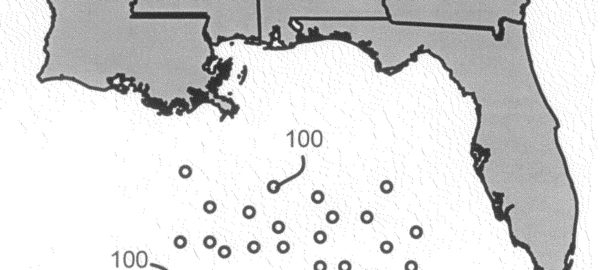
To be effective, the U.S. would need to deploy thousands of these devices, out in deep water, and tether them to anchors or drone-like devices that would counter tidal drifting. The illustration at the top of this is from the patent application, showing where they could be placed to be most effective.

Mental and Political Borders

Estimates are that their deployment would cost somewhere near a billion dollars, and in their first year alone could save tens or even hundreds of billions in property damage and citizen displacement. This doesn’t include the seemingly inevitable loss of life that comes with a devastating hurricane.

So why aren’t we trying Salter Sinks?

I suspect the problem is a combination of mental laziness and opposition to government spending that could be targeted as wasteful or considered in part aid to neighboring countries. (Remember that threat to our democracy I mentioned at the top? It comes with populism that reasons, weirdly, that anything we spend taxpayer money on should only benefit the U.S.)

If I’m right, it’s a paucity of both imagination and generosity that will keep us bailing out hurricane-devastated regions of the U.S., year after tragic year, instead of investing far less money in prevention.

I’m reminded of that old joke, “Everyone complains about the weather. But do you hear about anyone doing something about it?”

In this rare instance, our country actually could.

No-kill is brilliant branding. The lives saved may be our future generations

For nearly a decade I’ve been crowing about our plodding progress toward lab-grown meat. The biggest barriers are from two realms: Scalability and consumer psychology. This piece in The Guardian describes how Eat Just seems to have addressed both. I couldn’t be more thrilled, and for reasons I’ll get into below, you should too.

Now being test-marketed in Singapore, their lab-grown chicken nuggets (made with other plant-based ingredients) have found a way to scale production of meat from chicken stem cells.

They’ve also addressed the “yuck factor” that can hinder consumer trial by emphasizing the humane nature of their product. “No-kill” is brilliant marketing.

Saving Our Planet While Sating Our Desire for Meat

What you might not realize is the life that is saved may be our climate, and possibly our very species. As I described in detail in my 2011 post, raising livestock not only harms our environment to the extreme (greenhouse gases, deforestation, fresh water depletion) but our very gut biome (the majority of antibiotics are used on livestock and not humans). And don’t forget the horrific working conditions that seems to be intractable within the factory meat industry.

For these reasons, I’m optimistic that we are finally making progress in addressing our evolutionary hunger for meat with products that do not introduce death throughout the farm-to-table equation.

Pandemics are a leading cause of conspiracy theories

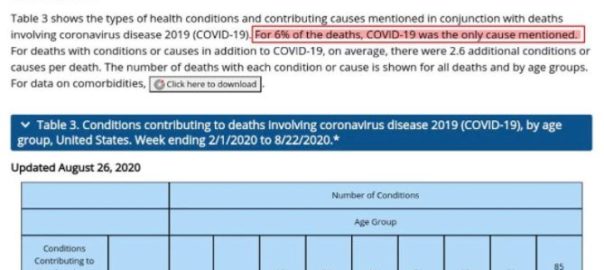
Update: The tweet that seemed to trigger the disinformation being shared (graphic of it shown above) was ultimately pulled down by Twitter. But not before it was shared with millions of Twitter accounts.

This morning a friend sent me an email with an attached video. In that clip, it showed a press conference where a health official defined a death by Covid-19 as, “at the time of death, the person has tested positive for Covid.” The video voice-over then said that this means if the infected person got in a car wreck or fell off of a cliff, that person was considered a Covid death.

This is a friend who should know better.

The temptation is to hit delete — to say nothing in order to preserve the friendship. But this has been a tough weekend for me. It seems much of the country is facing bleak news by trying conspiracy theories on for size. I’m not that sort, and instead (I guess) am coping … by being a scold. I hit Reply and wrote a response.

And guess what? I didn’t feel better afterward, but maybe me sharing facts with my friend will stop him from spreading toxic videos. If you’d like to join me in my role of scold, here are the facts I shared, in this excerpted email response.

Spread these facts and their underlying logic freely, because other people are spreading distortions at a far greater rate!


I’m sorry, but this is propaganda, not humor.

It talks about how if you die in a car accident while diagnosed as having Covid, it’s considered a Covid death. Hospital emergency rooms are not over-run with people who’ve been in car crashes or falling from cliffs. They’re full of people who would have been co-existing with — successfully managing — chronic conditions like heart disease or diabetes, but now are gasping for their lives and dying alone.

Remember Ronald Reagan’s “Welfare Queen,” Linda Taylor? He used it as an example of the rampant abuse of the welfare system, and it worked. Yes, she did abuse the system. But she was a statistical outlier, used by Reagon’s campaign to prove some outrageous trend. Here’s the truth:

https://www.washingtonpost.com/history/2019/05/21/she-was-stereotyped-welfare-queen-truth-was-more-disturbing-new-book-says/

This morning I’m seeing Twitter blowing up with “plandemic truthers” using CDC statistics to somehow minimize the deaths of tens of thousands of Americans … A number that’s currently three times the number of Americans killed in action during the entire Vietnam War.

People spreading these “what-about-isms” are unknowingly carrying water for those who would prefer to wish this pandemic away — or worse, those who are trying to pit people against each other. It’s a tactic refined by the KGB, which is Putin’s old training ground:

https://en.wikipedia.org/wiki/Whataboutism

The cause of slowing Covid deaths wasn’t helped by speakers at this week’s Republican National Convention. They intentionally referred to Covid in the past tense. That’s while 1,000 Americans every day were dying of having Covid while getting into auto accidents, or falling off cliffs. Or being old, or having heart disease or diabetes.

As I mentioned on the phone when you and I we were last chatting, pandemics produce a byproduct: Conspiracy theories.

The information bubble that some Americans talk themselves into is alarming, and is likely responsible for the fact that the U.S. has 4% of the world’s population but 25% of Covid cases.

Who knew the U.S. had so many car accidents compared to the rest of the world? Or cliffs?

If you’re socializing today, and talk to people about how Covid patients are dying of underlying conditions and not Covid, you might want to throw in one more underlying condition that has nothing to do with the virus — except it has everything to do with it. That’s the spike in suicides among emergency workers:

https://www.ncbi.nlm.nih.gov/pmc/articles/PMC7331553/

Yes. None of these nurses caught the disease. They just inconveniently took their lives at a time when they were working double shifts in extremely dangerous conditions with patients who were thoughtlessly dying — unable to say goodbye to their families except over a cell phone — at unprecedented rates.

(And somehow these dead healthcare workers aren’t being tallied as yet another subset of Covid deaths — certainly they should also be counted, right? As well as the people who are postponing cancer screenings while cancer was growing inside them, or those with heart attack symptoms who aren’t seeking help because they’re afraid they’ll catch the virus in a hospital? Their deaths aren’t included in our Covid statistics. Maybe that’s why experts say our current 180,000 deaths is actually an underestimate, not some willful exaggeration.)

So, I guess you shared this video with the wrong person, huh? 🙂

Stay safe.

Zhuzh the Police

Words matter. I’m a student of politics and political movements. Words there can be the difference between a movement living on to bring about real change or fading into obscurity. Remember the sweeping reforms to protect our 401Ks and home values, in the aftermath of poorly regulated collateralized loan obligations, driven by the battle cry Occupy Wall Street?

No, of course you don’t, because no real reforms happened! Judging from changes they initiated, the words Occupy Wall Street weren’t worth the poster board they were printed on.

That’s why I listened with interest to this episode of The Gist podcast. In it, the host Mike Pesca echoed my concern about today’s battle cry, “Defund the Police”:

“I will admit defund the police gives me pause as a phrase, because I’m so silly as to conjure the actual definition of the word defund, which is to take funding away. This leads to a debate with people who say, No, no, no, no! Defund means decrease funding. To which I say, ‘No. Decrease means decrease. Defund means defund.’ Luckily, I have here John McWhorter, who I shall now ask: Who has the better side of this argument?”

Words are hard

You should know that McWhorter is also the host of a podcast (who isn’t these days?). It’s called Lexicon Valley. But more pertinent here, his day job is teaching linguistics and American studies (among other subjects) at Columbia University. Here’s an excerpt of his answer to Mike:

“It’s tough. … Of course, defund is supposed to mean what it means. But then, on the other hand, as a linguist, my mantra is always that the meaning of words always changes.”

“And [you could say] Defund the Police is pragmatic in that there’s drama in it.”

“Defund the police pricks up people’s ears. But then, of course, most of us weren’t aware that you could say defund to mean give less money.

“The problem is simply that to say ‘Decrease the amount of money given to the police’ doesn’t fit on a sign. It doesn’t sound as good. It doesn’t stick in the mind.”

He later employs this apt simile: “[Defund] sounds like you’re taking a silverware drawer and throwing it down the steps and you listen to all that noise and you see all that mess … That’s part of it, I think.”

Then McWhorter gets to the part that concerns me … and the host:

“Defund is challenging in that people are going to hear it as meaning ‘Don’t give the police any money and just start again,’ which is what [only a few] people mean.

“But the problem is figuring out whether a person means that or something more moderate will always take up space that could have been taken up with more substantial discussions. And it kind of throws red meat to the hard right who will enjoy trying to make everybody who is left of them, including the center, seem like they’re idiots.”

Polari to the rescue

Polari is a “mongrel language” you probably haven’t heard of, but you’ve used some of its words and phrases in conversation. Have you called something camp? Polari. Rough trade? Butch? Also Polari.

If you were to triangulate from the themes of those words, you’d conclude this is some sort of gay slang. And you’d be right. And although it came primarily from Italian, it was used in the gay and criminal underworld of England in the last century and earlier, when being gay was criminal.

I first heard one particular Polari word in the early 2000s, as a straight clueless guy who was the exact target audience for the make-overs on the then-new series, Queer Eye for the Straight Guy. I will say, by the way, that I still use some of their fashion and grooming tips today. They showed me the right way to shave my face with a safety razor. Thank you, Carson!

And it was Carson who introduced me to the Polari word zhuzh. If you’re new to it, it’s pronounced zzoosh, and means “tart up,” as in a hair style. And for the following reasons, I recently proposed Zhuzh the Police as a better replacement for the original:

Now hear me out, because I’m dead serious.

If I’m a typical police officer, or even a centrist voter or legislator, “Defund the Police” is worse than inaccurate — it’s naive and incendiary.

As @badfragments pointed out:

When people say “Defund Planned Parenthood” they mean destroy it. So you can bet on “Defund the Police” being taken the wrong way by many. Even though I embrace the significance of the phrase I feel it can be used to hurt the ideals of the cause.

Add new meaning to a word that’s new to most

Here are three ways that Zhuzh The Police is an improvement, and should be adopted today in support of this important political movement:

  1. As I mentioned in my tweet, it comes from a language that was created in opposition to unfair policing. Gay men in England at the time of its use were singled out by police there in a way similar to the way Black people are oppressed today. So why not use one of their words to call for reform?
  2. It’s funny to those in the know. And laughter opens the mind and encourages discussion. Of course we don’t want to give police a new hair style! But we do want to improve them in the eyes of most Americans. I can hear the movement leaders now, on the Sunday morning political talk shows: Let’s not defund police, let’s give them a thorough makeover!
  3. Since zhuzh is a new word to most people, it’s far more malleable. It is free of any negatives because it’s a blank slate. Even McWhorter predicts that defund will never find its way into common dictionaries. (Well, what he said is it will fizzle the way occupy did). But zhuzh could make it there, with a new meaning about a growing, thriving political movement!

What do you think? I’ve turned off my comments here, but would welcome them on social media.

Police photo courtesy Wikimedia Creative Commons

In praise of brownie charts

This week I presented a data visualization talk, and had the excuse to discuss the world’s most poorly named chart: The tree map.

I say excuse because I frankly think what I did was wonderful. A decade ago I named the tree map what it was always meant to be: The brownie chart. I’ve regretted many things in the time since, but I never regretted that scrappy act of rebranding. Consider the tree map:

Example brownie chart, with a legend for the heatmap

Does that look like a tree to you? Of course not. But a pan of multi-colored brownies? You bet. And Yes please.

I explained to my audience that calling it a brownie chart adds it to the small but growing pantheon of carb-based area charts.

When you want to express areas as parts of a whole, before the tree map you had two choices: the pie chart and doughnut chart. Each has a problem, and I’m not alone in pointing this out. Neither is good at efficiently comparing many different areas. So now, instead, I give you the brownie chart:

The brownie chart shown with its cousins, the pie chart and doughnut chart

And by efficiently, I’m specifically referring to the fact that the circular office break-room staples force readers to repeatedly leap back-and-forth from the chart and the legend. Or, for instances where the “slices” are labeled, just making sense of all of them!

The brownie chart fills a rectangular space, which gives far more information — literal real estate — in rectangular computer monitors, cell phones, and most rarely today, printed pages. The brownie chart also gives readers another dimension of information. In the example above, I was able to express conversion levels using a heat map.

So when your colleagues suggest a pie chart or doughnut chart, present to them an oven-fresh brownie chart!

FilmStruck: Can you ever forgive me?

Friend, Romans, cinephiles, lend me your ears. I am here not to praise FilmStruck but to bury it. This is not a popular opinion. The near consensus after the announced plans to shutter the movie streaming service, three weeks ago, was one of mourning. For good reason: It’s an exclusive source for many foreign, classic and independent films, including The Criterion Collection.

And since the announcement I’m reminded of how sad I’ll be if I never see many of its films, or see them again. Because that truly is the power of great films. You want to see them more than once.

Two examples: I was saddened to realize that most of the wonderfully innovative films by auteur Mike Leagh, including my favorite, Life Is Sweet, are not available for streaming elsewhere. Nor is the film that introduced me to writer / director Nichole Hoffcenner, Walking and Talking (and also to the performances of two fresh-faced unknowns whose names you may recognize, Catherine Keener and Liev Schreiber).

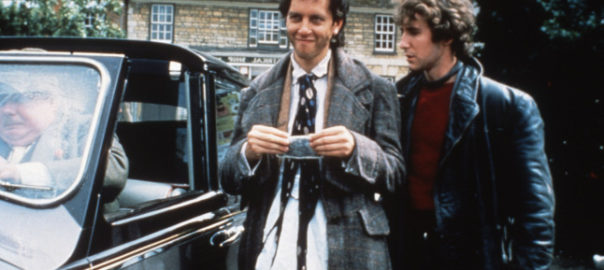
And — Oh no! — There goes my chance to rewatch the wonderful performances and grungy farce that made Withnail and I an art house masterpiece. I’m especially grateful to that film for introducing me to Richard E. Grant (left in the still, with a Trumpian-length necktie).

I’m tormented by these losses, and the FOMO of all the other classics in the archive. When I subscribed to FilmStruck (and I did subscribe, for a full year, twice), those films I listed were just three in my watchlist of over 100.

Can You Ever Forgive Me?

Now, I simply have to relish new performances by these actors, including a film I cannot wait to check out. It has Richard E. Grant doing what he does best — playing a slimy reprobate — and from what I’ve heard does it so well he’ll assuredly be nominated for a long overdue Oscar nomination:

(And, Hooray! Nicole Holofcener co-wrote the film!)

So I’m grieving. But why haven’t I joined the chorus of people chiding FilmStruck’s owners for making a terrible decision? Because I think, although preventable, this service’s money losses led to a logical decision.

Not that they’re off the hook. Far from it.

I subscribed and cancelled twice to this service because it was terrible. Here’s how I responded to an article in Slate about its demise:

I handed FilmStruck a stack of ones (well, virtually … over 100 of them), twice, yet I never got to stream a single film of theirs to conclusion.

Also, when I would return, to see if I could complete a film that was cut short due to the dreaded buffering “progress wheel,” the film would start at the beginning.

It’s simplistic to say that the owners of FilmStruck, Turner Classic Movies, are being mean. It’s more accurate to say they have been, since the beginning, extremely negligent, which has led to the red ink they’re now using as their excuse to close the project.

By refusing to upgrade their streaming service when they received my — and I’m sure many other — detailed emails explaining how I was cancelling because they needed to fix their technology, they proved themselves not so much art-haters as tech-newbies.

FilmStruck, for its retrograde user experience, deserves to be in the same ash heap of tech history as Blockbuster and MySpace. We can only hope the films can one day rise phoenix-like, so I can get my Withnail fix.